Supporting Graduate Student Academic and Professional Success
GradQuant Staff
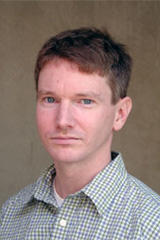
Dr. Kevin Esterling, GradQuant Faculty Director
Dr. Esterling is a professor in the Department of Political Science and the School of Public Policy at the University of California, Riverside. His research focuses on deliberative democracy in American national politics. His current work identifies the conditions that lead citizens to engage constructively in public discourse. He is the author of The Political Economy of Expertise: Information and Efficiency in American National Politics (University of Michigan Press, 2004). He has published in a number of journals, including The American Political Science Review, Political Analysis, The Journal of Politics, Rationality and Society, Political Communication, and the Journal of Theoretical Politics. His work has been funded by the National Science Foundation and by the MacArthur Foundation. Esterling was previously a Robert Wood Johnson Scholar in Health Policy Research at the University of California, Berkeley and a postdoctoral research fellow at the A. Alfred Taubman Center for Public Policy and American Institutions at Brown University. He received his Ph.D. in political science from the University of Chicago in 1999.
Email: kevin.esterling@ucr.edu
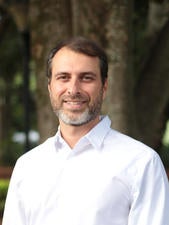
Dr. Diogo Ferrari, GradQuant Associate Faculty Director
Dr. Ferrari is an assistant professor in the Department of Political Science at the University of California, Riverside. His research focuses on political methodology and comparative political behavior. He investigates the relationship between socioeconomic conditions, cognitive perceptions about the socioeconomic environment, opinion formation, and political behavior. His research on political methodology focuses on causal inference, machine learning, Bayesian statistics, semi-parametric Bayesian models, and computational methods for social science. Before joining the University of California, Riverside, he worked at the University of Chicago where he taught at the Computational Social Science department. He is a research associate at the Center for Metropolitan Studies (CEM/USP) in Brazil. Dr. Ferrari holds Ph. D. in Political Science and Scientific Computing from the Department of Political Science and the Michigan Institute for Computational Discovery and Engineering (MICDE) and a graduate degree in statistics at the University of Michigan.
Email: diogo.ferrari@ucr.edu
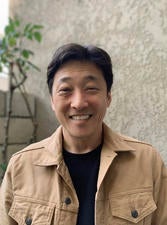
Jason Chou, GradQuant and GSRC Program Specialist
Jason has been supporting student success at UCR since 2004. He has an M.A. in TESOL (Biola U.) and taught English language at Mt. San Antonio College and at Chiang Mai University before coming to UCR. He also has a B.A. in Physiology and Cell Biology (UC Santa Barbara) and an M.A. in Philosophy (Talbot Theological Seminary), and his background includes studies in higher education (UC Riverside) and music production (Musicians Institute). He enjoys spending time with his family, and in his solo moments he likes to read, play guitar, surf, or observe clear night skies with binoculars and a telescope.
Email: jason.chou@ucr.edu
Office Hours: Mondays, 1pm - 2pm
Office: Life Sciences 1425
Phone: (951) 827-4291
GradQuant Lead Consultant
VACANT
Email: gradquant@ucr.edu
Office: Life Sciences 1425
Phone: (951) 827-4291
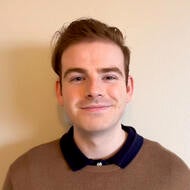
Harry Muttram, GradQuant Consultant
Harry is a Ph.D. student in the Department of Political Science at the University of California, Riverside, where he previously earned his M.A. His research interests include political representation, bureaucracy, policing, and quantitative methodology broadly. He is currently a graduate student researcher for the Everday Respect research team, an interdisciplinary group of researchers seeking to develop a multimodal, multi-perspective approach to study communication between officers and drivers during traffic stops. His work focuses on the compliance of police as street-level bureaucrats with formal institutional changes aimed at constraining officer behavior and the consequences of police interactions on the attitudes of the mass public. He approaches his work from both an institutional and a behavioral perspective.
Specialties: Statistical inference, Linear Regression, Generalized Linear Models, Multi-Level Modeling, Causal Inference, Matching, Instrumental Variable Models, Difference-in-Differences Methods, Synthetic Control Methods, Regression Discontinuity Designs, Survey Experiments, R, LaTeX